


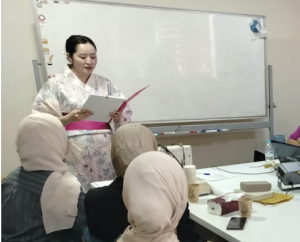
本日、ヨルダン滞在の市邨高校ユネスコ平和教育推進部の松野至教諭(名古屋経済大学ユネスコESD推進室特任講師)が、ヨルダンJICA帰国研修員同窓会(JICA Alumni Association in Jordan:JAAJ)が主催する、日本の伝統衣装「着物」をテーマとしたワークショップ(日本の浴衣作成研修)に参加しました。
日本のユネスコ加盟75周年記念事業の一環として、市邨学園の名古屋経済大学ユネスコESD推進室と市邨高校ユネスコ平和教育推進部では、探究型のユネスコ国際理解推進事業、ESD推進事業に取り組んでいます。
8月19日には、国連UNHCRのMADE51のフェアトレード商品を製作している、トライバロジー社のヨルダンに逃れたパレスチナ難民女性・シリア難民女性とのオンライン学生対談会を実施いたします。
台湾と日本の学生たちが、年間を通して学び、考え、探究し、行動する、ユネスコESDプロジェクトです。
詳細はこちら ACCUユネスコアジア文化センターWEBサイト
本日、表敬訪問しましたJAAJは、JICAの研修や留学等のプログラムに参加したヨルダンの方々による組織で、日本で得た経験や知見をヨルダン社会へ還元するとともに、日本とヨルダンをつなぐさまざまな活動を続けています。
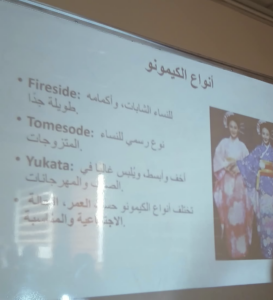
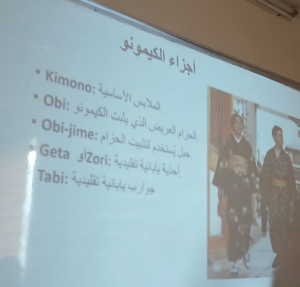
今回のワークショップでは、着物の歴史や特徴を学ぶだけでなく、模様や文字を用いたデザイン、紙を使った設計、さらに布地へのデザインや縫製へとつなげていく、実践的なプログラムが行われていました。
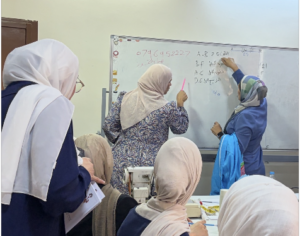
日本文化を一方的に「紹介する」のではなく、参加者自身が学び、考え、手を動かし、自らの表現として形にしていく姿がとても印象的でした。
またJAAJでは、長年にわたり日本語教育を続けるとともに、生け花、折り紙、書道などの文化活動、さらに近年では職業・技術人材育成にも活動を広げています。
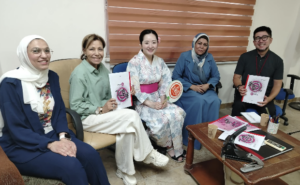
JICAの協力は、研修そのものが終われば終わりなのではなく、学んだ人々が帰国後、それぞれの社会の中で知識や経験を共有し、新たなつながりを生み出していく。
その姿を実際に見ることができたことは、今回のヨルダン訪問において大変貴重な学びとなりました。
私たちが進めるユネスコESDの取組においても、「学んだことを自分の中だけに留めず、社会へつなぎ、次の誰かへ手渡していく」という視点を大切にしています。
国や文化が異なっても、互いを知り、学び合い、経験を社会へ還元していくこと。
日本とヨルダンをつなぐ皆様の活動から、改めて多くのことを学ばせていただき、日本のユネスコ加盟75周年以降のユネスコ事業として、文化交流事業、国際理解、ESD推進に向けた探究事業の発展へと繋げていく会議を実施し、具体的な検討会議を行いました。
この後、「心の中に平和の砦を築く」ユネスコ国際理解推進、平和事業へと繋げてまいります。
JICAヨルダン事務所ならびにJICA Alumni Association in Jordan(JAAJ)の皆様、貴重な機会をいただき、心より感謝申し上げます。
【Learning from the JICA Alumni Association in Jordan】
During his stay in Jordan, Mr. Itaru Matsuno of the UNESCO Peace Education Promotion Department at Ichimura High School, who also serves as a specially appointed lecturer at the UNESCO ESD Promotion Office of Nagoya University of Economics, had the valuable opportunity to participate in a workshop organized by the JICA Alumni Association in Jordan (JAAJ).
JAAJ is an independent alumni association of Jordanians who have participated in JICA training, study, and other programs.
The workshop focused on kimono, traditional Japanese clothing, and provided participants with an opportunity to learn about its history, characteristics, and design through hands-on activities.
Participants explored design ideas using patterns and Japanese characters, developed their ideas on paper, and learned how these designs could be transformed into fabric and sewn into a sample garment.
It was particularly meaningful to see participants engage with Japanese culture not only by learning about it, but also by thinking creatively and expressing their own ideas through practical activities.
For us, this experience also offered an important opportunity to reflect on the value of learning across cultures.
In our UNESCO ESD activities, we place great importance on learning from people with different backgrounds, respecting one another’s cultures, and connecting what we learn to future dialogue and action.
Through this workshop, we were reminded once again that opportunities to learn together can help build mutual understanding and connections across countries and cultures.
We sincerely thank the JICA Alumni Association in Jordan (JAAJ) for welcoming us and providing this valuable opportunity.


